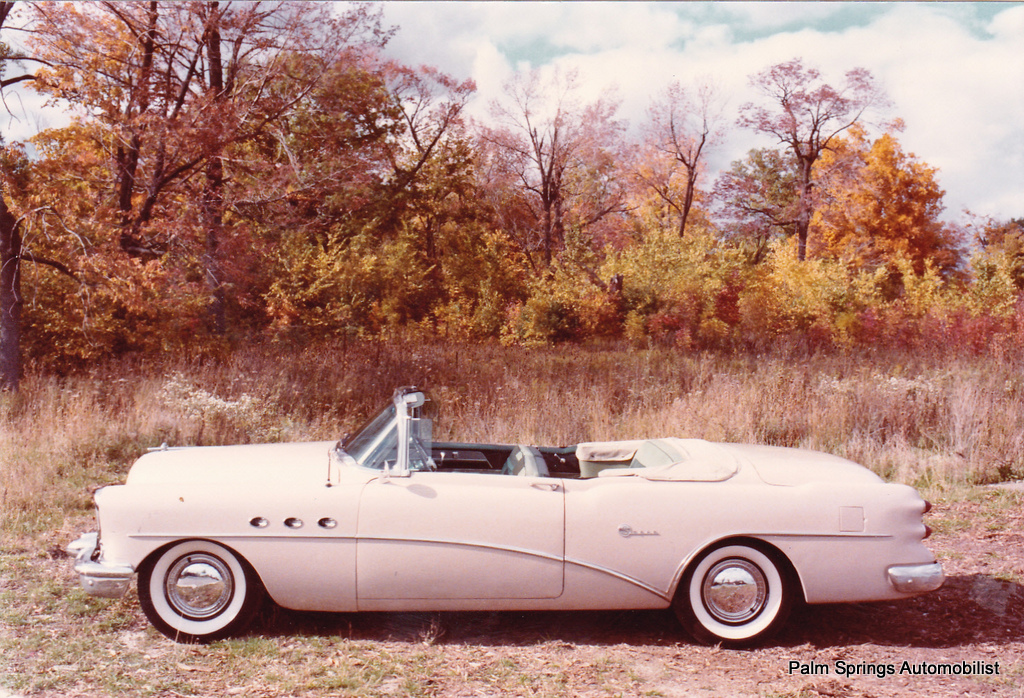
Monday, January 27, 2014

The Silver Arrow Memos- Part II- Phases II through IV


By Jeff Stork


Note: This is Part 2

Go Here for Part 1

And Here for Part 3

In the second part of our Silver Arrow Memos, we have a very inclusive document that was written to Mr. W. L. Mitchell on October 15, 1962. By now we have gotten through Phase I and the 1963 Buick new car announcement, and it is presumed that all went well but it is worth noting that we have a new author for this document, Mr. E. C. Campbell.

 This memo outlines the steps for phases II through IV of the continuing development of XP-810, and is written to the fine standard and dignified tone of the last one. Honestly, I can imagine Audrey Hepburn reading them in her "Sabrina" voice.

 Phase II-Completion Desired as soon as possible: 

 "The car is to be picked up on or about Monday, Oct. 22 for return to the Division. The engine is to be replaced and the car returned to Styling."

Phase III- Completion Desired in Early November

"The following is being worked on now in the design, engineering, and fabrication departments and is to be completed as soon as possible in early November for evaluation before the car is returned to the shops for fabrication of the longer term items found in Phase IV.  "

I'm going to paraphrase here for the sake of brevity, but the memo describes the following changes in exquisite detail for Phase III- removal of the shields behind the headlamp covers, removal of sail panel chrome molding, refined trim for the quarter panel scoops, new rocker panel and lower rear fender moldings as per Riviera S. O. 40193 (Board of Directors Presentation Car), removal of the B U I C K lettering from the rear deck lid and creation of a Riviera script badge to replace them, and the design, engineering and installation of special low profile exterior remote controlled mirrors that will involve the coordination of Buick Exterior, Buick Interior, and Engineering.

There's plenty in store for the interior as well, starting with removing the Astra Buick Seats from a Skylark show car, S. O. 40224, retrimming them, and fitting them to this car. Along the way,  there are plans to chrome plate the windshield pillars and window garnish moldings, repaint the dash and console, fit new metal trim to the dash, create a new Riviera nameplate for the glove box door and create a wooden shift knob.

Oh, and retrim the entire interior. Seats of silver leather, new door panels, kick panels, carpeting, headliner, package shelf, and trunk. On a three month old car. And this is still Phase III- all this is being done while Phase IV is being developed.  Have you gotten the impression yet that all of GM Styling existed to please Mr. Mitchell? Of course, XP-810 was a rolling laboratory and the innovation could benefit future GM cars, but people certainly tried very hard to please Mr. Mitchell.

Phase IV- Desired by Early December.

Exterior

  1. Panic stop lights are to be built into the tulip panel. This will require reworking of the backlight lower reveal molding.
  2. A new cowl vent grille, with air scoops, is to be installed. 
Interior
  1. A new wooden steering wheel and a new adjustable steering column are required. The wheel will be made new. The steering column is to be reworked from a 1963 production tilting column. A telescopic feature is to be added for fore and aft adjustment.
  2. The instrument panel cluster is to be revised to permit the addition of a tachometer. The requirements for the mechanical tachometer drive system are to be coordinated by the Interior Engineering and Mechanical Assembly Departments.
  3. An AM/FM radio is to be installed. A speaker is to be installed on the instrument panel. 
All design work will be done by the Buick Interior and Exterior Studios, and all development and engineering will be done by the Interior and Exterior Engineering Departments.

E. C Campbell
Program Planning

Below you will see the original memo along with period photography of the XP-810 Silver Arrow. And yes, there's much more to come


Monday, January 20, 2014

The Silver Arrow Memos- Part I


This is Part 1.

Go Here for Part 2

And Here for Part 3


First Silver Arrow Memo- July 11, 1962


By Jeff Stork 

No Rivieras are more famous than Bill Mitchell's Silver Arrows. Created ostensibly as show cars but in reality intended for his personal use, the Arrows are a mixture of dream car, rolling laboratory, and ultimate corporate perk. We've spoken before of Mitchell and how it is "Good to be King."

Now in a series of original GM documents, we can watch the evolution of the original Silver Arrow as it evolves into its current form via a series of Styling Staff memoranda that track the progress of each phase of the car's modifications until they arrived at the car which resides today at the Buick Gallery in Flint.  They span a period of time from Summer 1962 until almost 1965.

The memos are really more letters of understanding, on impressively logoed GM Styling Staff letterhead (how cool is that) are written to Mr. W. L. Mitchell and concern the design and construction of one 1963 Buick "E" Riviera Production Car, Special Order # 40210. The early ones are written by E.G. "Bud" Schenk, head of Program Planning. and carbon copied to everyone involved, even if only tangentially.

Schenk was the one responsible for supervising the construction of the car, coordinating all of the activities between the various styling studios and all of the tradesmen, the division staff and above all keeping Bill Mitchell in the loop. The Special Order Number (#40210) was used to keep track of all the expenses incurred on the car for the accounting department. The prototype number was XP-810 and would be how design staff would refer to it. The world would know it as Silver Arrow I.


Silver Arrow I outside the GM Styling Building


This earliest memo is dated July 11, 1962, and outlines the first round of changes to be made to the car. It's obvious that Schenk chose the language very carefully and the memo is worth reading.

"Mr. Mitchell has requested the Buick Exterior to undertake the design and study involved in making new concealed headlamps, radiator grille, and extending of front end sheet metal as an experimental proposal on a 1963 Buick 'E" Riviera Coupe production car. Present plans call for the completion of these changes on the subject  car so that it may be available to be driven on Buick's 1963 Car Announcement Date Thursday, October 4.

In general, the required changes are as follows as of this date-


  1. New Concealed rotating headlamp grilles on the front fenders. Plans are to study the using of 7" diameter seal beam lamps. These units must be operable and applicable to a road car.


  2. Radiator grille to be installed per design as proposed and released by the Buick Exterior Studio.


  3. Revisions to front end sheet metal consisting of extending the hood surface and of possible fromt fender changes.  


  4. Modeling of surface changes will be some in the Exterior Studio and information expedited so that engineering drawings can be released to permit the pre-fabrication of parts and components prior to the arrival of the car.

    It is anticipated that the car will be delivered to Styling in the early part of September."

    E. G. Schenk
    Program Planning


    In a word, wow. Buick Styling studio modeling, engineering drawings being completed, parts to be pre-fabricated prior to the first week of September so that someone very important can drive this special car on Buick's New Car Announcement Day. And as far as who the special someone was, one need look only to whom the memo was addressed - Mr. W. L. Mitchell.

    As I said, it's Good to be King.

    Saturday, January 18, 2014

    2014 Camaro ZL1- Chevy Pumps it Up

    By Jeff Stork

     I pretty much grew up in the back seat of a first generation Camaro- a ‘67 SS ragtop, and so I was pretty pleased to see the return of the Camaro back in the Spring of 2009. I thought that the sixth generation offering was attractive in a respectfully retro way that was very true to Camaro’s roots, but even in SS trim I fell short of seeing it as an out and out performance car.


    Well, like the little boy from Jerry Maguire who grew up and became a bodybuilder, things have changed. Chevy must have poured a whole lot of Muscle Milk into their pony car, because the ZL1 is like no Camaro you’ve ever seen, and muscle doesn’t even begin to describe this supercharged monster.


    It’s not just an engine- so much of the ZL1 is special to the car that it’s like a Camaro body shell was dropped on a racing chassis. In fact, over a third of all the parts are unique according to Chevy. Yes, the 6.2-liter LSA engine (borrowed from the CTS-V) is impressive- what’s not to like about an all-aluminum supercharged V8 that delivers 580 horsepower and a whopping 556 lb-ft of torque, and has an exhaust note nothing shy of heavenly? Nothing. Seriously, I’d like to make the exhaust note into an alarm clock and wake up to it every morning.


    But as I noted, ZL1 is much, much more than an engine. The test car had a six speed manual Tremec gearbox, there’s also a six speed automatic available as well- both specially modified to handle the torque of the LSA. The whole chassis is special- from the third generation magnetic ride control with three settings including “track,” 20” special wheels and tires, and monster Brembo brakes, to the front cross-tower brace and rear sway bar, this is one highly tuned Camaro.


    It’s the only Camaro with electric power steering and what Chevy calls Performance Traction Management- which ties together the ride control, launch control, traction control and electronic stability control. In fact. the whole chassis package is so special they decided to offer it on the SS as the 1LE Track Package. The result? a Camaro that sticks like glue and handles do well that you start looking for the BMW badge. And for a car that can be a balls-out screamer, it’s remarkably smooth and nimble for around town driving. It’s almost like it has two distinct personalities, and we’ve all dated someone like that.


    As any competitive bodybuilder can tell you, Muscle don’t come cheap. The ZL1’s base price including freight is $55,950, and our test car featured $1995 Recaro seats, $795 Navigation, a $600 carbon fiber hood insert, $500 worth of microfiber suede interior trim and to top it all off a $1300 gas-guzzler tax adding up to $61,140 which is serious money in anyone’s book. In fairness it should be noted that the cars offering comparable performance can cost many tens of thousands more- but it’s nonetheless a new and steep altitude for the Camaro.    


    Of course nothing is perfect. With Red Hot paint the color of lava, enormous black wheels, a giant hood scoop and that oh-so-heavenly-but-loud engine noise, the ZL1 doesn’t exactly keep a low profile. Speaking of low, the coupe’s oh-so-low roofline makes for a cramped cabin and I’ve never seen a sixty-thousand dollar car that more needed a memory seat and didn’t have one. And I guess I’ll take the hit for the less-than-10-mpg observed fuel economy.


    But at the end of the day, the most powerful Camaro ever is one hell of a well done GT. It screams when you ask it to, it sticks to the road and goes where you plant it - with no body roll and even a remarkably decent ride. It’s got that whole Ann-Margret “Kitten With a Whip” thing down pat. And while I couldn’t figure out how to fold the Recaro seats forward, there wasn’t really anyone I wanted to put in the back anyway.


    So why would anyone want a nearly-600 hp supercar that can easily exceed any speed limit in Palm Springs in first gear? Because on the right road, it’s superb.


    Oh, and the muscle boys loved it. :)


    Model is fitness instructor Chris Bates. Photos by Jeff Stork

    Friday, December 6, 2013

    And Then There's Mauve


    Yes, it's a pun, and it's a color. More of a scale than a color. Somewhere from purplish rose to greyed grape, the universal element being a shade of purple. Sometime the word itself is included in the color name, like the "Mauve Metallic" 1966 Charger above, other times the color is given an ethereal and evocative name- as in Chevrolet's 1965 "Evening Orchid." The best name of all was probably Cadillac's "Persian Sand" of 1959.

    Of course we're talking about Mauve, the purplish pinkish pastel that wormed its way into our hearts, minds, and cars beginning in the late 50s, and for ten or so stylish years appeared on our showroom floors. More sophisticated than red, cooler than blue, and always in the best of taste, we lift our hats to the many shades of  Mauve: 


    Saturday, November 16, 2013

    Volkswagen GTI - The Hot Hatch Turns 30


    I don’t buy modern cars these days, because between press cars and the small flock of Mercedes diesels that tend to follow me home, there's just no need. But it’s pretty inevitable at a party, someone will ask me “What car would you buy today” or “What was the first new car that you bought?” And the answer’s pretty much the same - the Volkswagen GTI.


    I was a recent college graduate in a terrible job market when the first US Market GTI made its appearance for the 1983 model year. Made in Westmoreland PA, it had several key changes from the Euro version and had to overcome the “Americanized” image that was diluting the Rabbit’s market appeal. To say that it did was an understatement. I was enchanted with that snarky, sassy little hot hatch and had to have it. Finally one showed up at the local VW Dealer- it was black with a sunroof and was built on the fourth day of production. I was toast. It was the first new car I bought for myself. And I recall it more fondly than any car I’ve ever owned.


    I was piling up tons of miles on it so I decided to trade it for a second-gen in the summer of 1985. Longer wheelbase, more sophisticated, understated Teutonic interior, and actually faster but didn’t seem it, and it had a revolutionary new option- power steering. I liked the second one a lot but didn’t adore it- and ultimately went to work for a Big Three company that frowned upon it.


    I guess all the VWs I’ve driven in the last couple of years have been benchmarked against the GTIs in my memory, and I’ve made note of characteristics that remind me of the GTI, so with the little hot hatch turning 30, I asked for a 2013 to evaluate.


    My test GTI was a German-assembled Tornado Red four door with sunroof, Nav, and DSG dry-clutch automatic, and from the first twist of the key, it made me smile as if 30-years-ago me were driving it. Of course, everything is different, and much more advanced, but it’s downright surprising how familiar it all feels.


    Let’s start with the shape- yes, it’s more aerodynamic now and the LED-accented projector headlamps are pretty hard to ignore, but basically it’s the same red-accented box-on-a-box hatchback shape it’s been all along. It has more of the shape of the '85 than the '83, the wheels are bigger and the tires are meatier- they’re now 18s, but squint just slightly and it’s still a GTI.


    That familiarity extends to the interior as well. The plaid fabric is homage to the original German GTI- both of mine had 80s strobe fabric- but the thickly bolstered seats are instantly familiar, as is the whole driving position- including the shift linkage and steering feel. It fit like a glove. It seemed perfectly appropriate to set the Sirius radio to 80s on 8 and leave it there all week.


    It may be familiar, but of course it’s really all modern. The 2.0-liter TSI engine develops 200 hp and 207 lb-ft of torque, more than twice that of the original. It can do 0-60 in about seven seconds, which is light years ahead of the original’s 10 seconds, and it features electric power steering and traction control and stability control and cross differential control all the other modern conveniences that we can’t do without, although we never used to know we even needed them.

    The test car came equipped with VW’s DSG dual-clutch automatic, which was a point of controversy. I’ve always had manuals in my GTIs and would have preferred the six-speed stick, but the DSG was all that was available for my Oprah moment. And to me, it’s about as much fun as having Aunt Marybelle sitting next to me watching- it likes to keep revs under 3,000 and is always about two gears ahead of where I would like.


    Thankfully, there are two solutions- the Sport mode holds the gears much longer but constantly wants to play chicken with your right foot. Basically, it won’t upshift unless you lift off the throttle, which is more distracting than just slapping it over into manual mode and shifting the damn thing yourself. I must admit that if I still lived in LA, I’d probably go DSG, but otherwise I’d save myself $1100 and just opt for the six-speed.

    As a follow up, VW managed to send me a six-speed stick Jetta GLI for comparison it was exactly what I expected- short, precise shifts and a feeling of absolute control that the DSG never quite yields. Kudos to VW for the six-speed, it only confirmed my preference for the stick.


    And once on the road, it drove like a GTI should- long revving (especially in Sport mode), quick handling, surefooted and absolutely glued to the road. The best attribute is everything- it’s just such a well-balanced and pleasurable machine. A special shout out to the brakes- which feature vented rotors in front and solid ones behind- but had a super responsive feel and brought the little screamer down quickly and with excellent feel.  


    Thirty years ago, VW brought the hot-hatch to America with the GTI- a snarky performance car that you could strap two car seats into and enjoy your daily commute. The car has certainly changed over the years, but the mission hasn’t. And with the new generation due to arrive late next spring, I'm eager to find out if the GTI's personality remains intact. After three decades, I'm thinking that VW has it down.


    Wednesday, October 23, 2013

    The Story of Ruth- A Very Special Buick Super


    Ruth Helm and her new Super in Palm Springs, April 1954


    A car can be more than just a car. Sometimes it's a time machine as well, like the story I'm going to share with you about a very special 1954 Buick. Not a Buick Special- but a special Buick indeed.

    "The Beautiful Buy"


    It was the spring of 1954 in the little farming town of Caney, Kansas, which was located in the Eastern third of the state just north of the Oklahoma border. Buick advertised itself in 1954 as "The Beautiful Buy" and the local grocer, Joe Elliott was much impressed with the new Buick line up. There were only Ford and Chevrolet agencies in town, so he decided to drive over to Coffeyville and have a look. He stopped by the market to get some cash from the safe and also to pick up his only grandson, Blaine Jenkins- to accompany him on the twenty mile trip. Blaine had just turned twenty and loved automobiles more than anything. He was studying architecture at the University of Kansas but had just applied to Art Center in Los Angeles and wanted to design cars. However, that day he and his Grandfather were focused on just one car- a new 1954 Buick.

    They checked out all the cars in the showroom in Coffeyville and it turns out that they both were both taken by the same one- a new 1954 Super sedan in a color called Casino Beige with a green top. Mr. Elliott summoned the salesperson and signaled his intentions with a roll of bills. Soon he and Blaine were on the way back to Caney in the handsome new Super. To this day, Blaine recalls how thrilling the drive home was.

    Motor Trend profiles the 1954 Buick


    It turns out that Joe Elliott wasn't the only person enamored of the new '54 Buick. Halfway across the country,  in Hollywood, California- a lady named Ruth Helm was driving her 1948 Buick convertible past the Phil Hall Buick Showroom in on Sunset Boulevard, when a brand new Super convertible caught her eye. Coincidentally, this Super was also finished in the handsome Casino Beige, with a two tone green interior. She telephoned her husband Harvey at work that very afternoon to tell him she had seen a new Buick that she wished to buy.

    George Burns and Gracie Allen

    Ruth seldom telephoned Harvey at work. As the Head Writer of the George Burns and Gracie Allen Television Show, Harvey was pretty busy working on a new show every week. Besides, Ruth had her own income serving as the President of the Hollywood Democratic Club as well as being a Personal Assistant to actor Eddie Albert. But nonetheless she phoned Harvey- who like much of Hollywood was a Buick owner himself, and told him of the beautiful new car. He told her that it's her money, and by all means to buy it if she wanted it.

    The new Super in the Desert- Palm Springs, April 1954


    Ruth drove the car out of Phil Hall's Showroom on March 31, 1954. Almost immediately she and Harvey took it on a spring trip to Palm Springs, where they stayed with George Burns and Gracie Allen at their desert home. Of course they took pictures of the beautiful new Buick that she placed in her photo album. The album shows several other trips as well- La Jolla, Half Moon Bay, and what appears to be Lake Tahoe. The big Buick was an excellent road car, and the three of them traveled well together.

    Harvey Helm and the Super in La Jolla, 1956

    Harvey and the Super at Pigeon Point, Pescadero CA 1956


    Now these stories might seen totally unrelated but fate has a way of making people intersect. Back in Kansas, young Blaine had been accepted into Art Center and was preparing for a move to Los Angeles. His Mother suggested that she look up her old College Roommate there, a lady she knew as Ruth Van Eaton- but Ruth was now Mrs. Harvey Helm. Blaine arrived in Los Angeles in the fall and did indeed look up the Helms. His first memory was seeing her nearly new 1954 Super convertible- in the same Casino Beige that his Grandfather had. Sitting beside it in the garage was Harvey's new 1955 powder blue Century convertible, suggested that they had indeed been pleased with Ruth's purchase.

    Harvey, Ruth's niece and Blaine clean out the garage, 1955.


    The childless couple took Blaine under their wing and became his honorary extended family.  Both of Blaine's parents had been only children, so he came to regard the Helms as the Aunt and Uncle he never had. He recalls chauffeuring Ruth in the '54 and riding with Harvey in the blue '55. He tended bar for their Hollywood parties and met any of the celebrities of the day, and they all watched the Burns and Allen Show together on Tuesday nights. He had one special memory of accompanying Harvey to the VIP opening of Disneyland in 1956- it seems that being the Head Writer for Burns and Allen had its perks.

    Blaine and Harvey head to Disneyland, July 17, 1955


    But his time in Los Angeles was growing short. Graduation from Art Center neared and Blaine was offered a job at General Motors at the brand new Technical Center in Warren. He bade the Helms and their pair of convertibles farewell and drove East to start his career. And quite a career it was- becoming first a designer and later a Studio Chief, working on many, many Chevrolet and later Oldsmobile products including the Mako Shark and nearly every Corvair. Creating the first Monza, the first Caprice, and the first Ninety Eight Regency were just a few among his many accomplishments.

    Ruth's Lubricare card from Phil Hall Buick


    From time to time, travel would take Blaine to Los Angeles and he would look up the Helms. He kept in contact with Ruth even after Harvey passed away in 1965. Ruth got herself a new Buick in 1968, but being unimpressed with the trade allowance she simply kept the old '54, and the two cars sat side by side in her garage. Her health declined and they eventually stopped corresponding.

    And then, in the Autumn of 1976, Blaine Jenkins got a letter from Los Angeles. It was from the Helms' family attorney, advising Blaine that Ruth Helm had passed away in late summer- and that he had been left the Buick in her will. The purpose of the letter was to politely ask if he indeed wanted the car, which at that point had sat unused inside the garage for several years and was valued by the Estate Appraiser at a mere two hundred dollars. Blaine didn't hesitate for a second and advised the attorney that he did indeed wish to have it. It took a few months for everything to be settled, but by the spring of 1977 a dusty old Buick was on a truck to Detroit.

    "Ruth" arrives in Detroit, 1977


    The Buick, which Blaine called Ruth after his friend- arrived looking a bit neglected. The original paint was thin and the top was worn. Careless movers had dented the bumper and broke the grille. The interior had some seams coming apart and the carpet was worn through. But all in all, it was a straight, solid, and rust free example of a 1954 Super convertible with just over 80,000 original miles- and one of only 3,343 produced. He got it running and drove it for a few seasons, before taking it down for a proper restoration.

    The Super in Unrestored condition, 1980


    The car was largely disassembled and stripped down, Except for a past repair to the passenger door, it was in remarkably good condition. It was refinished in the original Casino Beige and the bright work was polished and replated as needed. The top frame was restored and a new top and well were sewn. The engine and transmission came out and both were rebuilt and detailed. But the green interior was largely reused. The seats were resewn and the door panels simply cleaned. New carpeting and rubber was installed, and the dash and garnish moldings repainted. The only change from original was the addition of a set of chrome plated wire wheels, which were a correct factory option for the car.

    Under restoration in 1986

    Going back together, late 1986


    Resplendent Ruth upon completion, 1987

    Blaine is long retired from General Motors, and lives in Palm Springs with his partner of 38 years, Philip. He's owned a number of classic cars over the years but there's one in his garage that he will never part with. After all, he's had it for thirty seven years- almost twice as long as the original owner did. Even more remarkably, the Super hasn't been in the stream of commerce since Ruth Helm handed over a check almost 59 years ago to the day. The Buick shines as brightly as it did when the restoration was completed almost 25 years ago.

    Blaine is recovering from surgery these days and doesn't drive himself, so I make it a point to drop by and take him for a ride in the Buick he has known for almost six decades. The Buick rolls along on glistening wire wheels, incapable of processing the passage of time. I glance over at him when we drive, and I'm not sure if it's Joe Elliott or Ruth Helm that he's visualizing riding along with us.

    Blaine, Philip and "Ruth" March, 2013

    As I said, a car can be more than just a car. Sometimes it's a time machine as well.
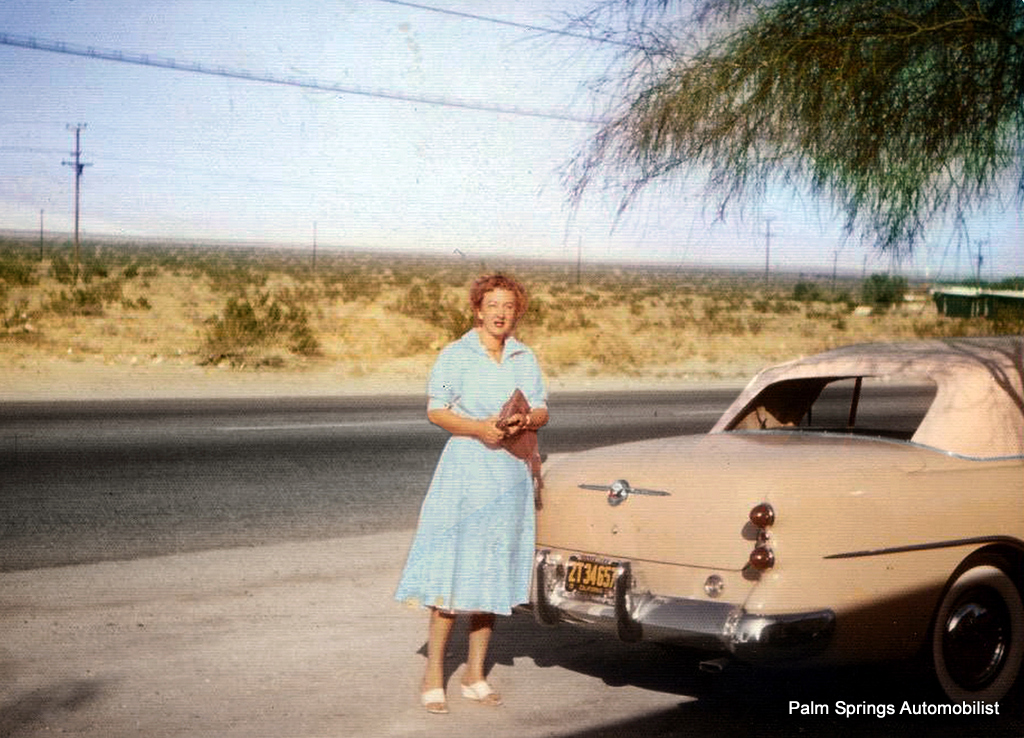
    Special Thanks to Casey Shain of the Art and Colour Blog for photo restoration.